Finding Your Way: A Fun Guide to the Map of Non-Monogamy
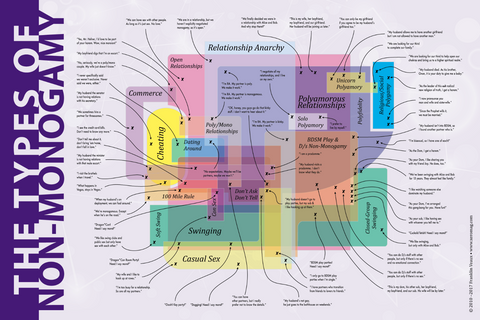
When it comes to relationships, many of us are used to thinking inside a pretty small box. You know, that monogamous box where one partner is meant to be everything to you forever and ever. But the options aren’t as limited as people think. Most of us grow up thinking monogamy is the only route, but guess what? Relationships can be as diverse as your favorite Netflix genres. If you’ve ever wondered what’s out there beyond monogamy, you’re not alone. Non-monogamy opens the door to a world of possibilities, and the coolest part? There’s no one “right” way to do it. As our understanding of relationships evolves, it’s clear that the one-size-fits-all approach doesn’t work for everyone. While my community knows that I often discuss various relationship dynamics, someone recently pointed out that I haven’t touched much on polyamory and non-monogamy. So, let’s dive into this topic from a different angle—by exploring the Map of Non-Monogamy. Whether you’re just dipping your toes in or you’ve been practicing for years, understanding your own preferences and how to talk about them can be tricky. That’s where the Map of Non-Monogamy comes in. It’s not just a neat chart—it’s a tool to help you navigate all the different ways people do relationships, giving you the vocabulary and confidence to express your needs. And trust me, it makes for some interesting conversations!
So, What’s Non-Monogamy Anyway? Non-monogamy is basically the umbrella term for any relationship where you aren’t exclusive to one partner. But what does that really look like? Maybe you and your partner are only interested in exploring new connections on vacation (hello, 100-mile rule!), or perhaps you’re interested in more emotional and romantic bonds with multiple people (that’s polyamory). Non-monogamy allows you to customize your relationships to fit your lifestyle and needs. The best part is, you don’t have to fit into one category. The map shows us how flexible and varied non-monogamy can be. It’s like a choose-your-own-adventure, but with relationships. And let’s be real—having the right words to describe what you’re feeling makes everything smoother.
The Many Models of Non-Monogamy
Non-monogamy is a rich and diverse world, and it can look different for every person. Here’s a breakdown of some common models you might come across: ● Polyamory: This is probably one of the most well-known forms of non-monogamy. Polyamory involves maintaining multiple emotional and romantic relationships simultaneously, with the full knowledge and consent of everyone involved. It’s about building deep connections, and it often involves long-term relationships. Think of it as loving more than one person at a time, where everyone is on the same page. ● Open Relationships: In an open relationship, you’re primarily committed to one partner, but both of you agree that it’s okay to explore romantic or sexual experiences with others. This type of relationship might focus on physical connection rather than emotional depth with other people, but every couple defines their own rules and boundaries. ● Swinging: Swinging typically involves couples who engage in sexual activities with others, often in a shared environment like a party or a club. Unlike polyamory, swinging is usually about sexual exploration rather than emotional connections. It’s often a way for couples to explore new sexual experiences together. ● Relationship Anarchy: For those who prefer a more fluid and individualistic approach, relationship anarchy is about rejecting traditional labels and hierarchies in relationships. Every relationship is defined by those involved, without placing one connection above another based on societal expectations. This means no rules about who gets priority, no automatic labels like “boyfriend” or “girlfriend,” and plenty of room for flexibility. ● Solo Polyamory: In solo polyamory, individuals maintain multiple relationships but prioritize their independence. They may not have a primary partner and often prefer not to live with or merge finances with their partners. It’s about maintaining autonomy while enjoying meaningful connections. ● Hierarchical Polyamory: This is a model where people practice polyamory but have a clear distinction between their relationships. Typically, there’s a “primary” partner—someone who holds more emotional or practical importance (like living together or sharing finances)—and “secondary” partners, whose relationships may be less prioritized in certain ways. ● Don’t Ask, Don’t Tell (DADT): In this model, partners agree that it’s okay to see other people, but they don’t share the details of their encounters. Some people prefer this arrangement because it keeps things simple and avoids emotional entanglements. It can be appealing for those who value discretion. ● V Relationships: In this structure, one person is at the center of a V, having separate romantic or emotional connections with two other people, but those partners are not involved with each other. It’s a great way to visualize relationships where someone balances multiple connections without all partners being interconnected. ● Kitchen Table Polyamory: For those who want a more community-oriented approach, kitchen table polyamory is when everyone in a polycule (network of people in a polyamorous relationship) knows each other and is comfortable enough to hang out together, even if they aren’t romantically involved with everyone else in the group. Think of it as one big family where all relationships are interconnected in some way. ● Parallel Polyamory: In contrast to kitchen table polyamory, parallel polyamory is where partners in a polycule don’t interact much, if at all. Each relationship is kept more separate, and while everyone knows about the other relationships, they may not form friendships or interact closely.
Navigating Your Own Path
The map of non-monogamy isn’t about sticking a label on yourself and calling it a day. It’s about exploring possibilities, learning new ways to express your needs, and giving yourself permission to live authentically. Maybe you’ll find that one model fits you perfectly, or maybe you’ll realize you can blend a few that resonate with your relationship goals. The important thing is that you have options, and more importantly, you have the freedom to choose what works for you and your partner(s). At the end of the day, non-monogamy isn’t about conforming to a set of rules. It’s about communication, trust, and building a connection that feels fulfilling to everyone involved. Whether you’re exploring polyamory, swinging, relationship anarchy, or a mix of them all, the journey is entirely up to you.
Final Thoughts: The Power of Exploration
Non-monogamy may seem like uncharted territory at first, but once you get a feel for it, you’ll realize it’s full of potential for deep, meaningful connections. The Map of Non-Monogamy is just the start. It’s an invitation to discover what kind of relationships truly align with who you are and how you want to love. So the next time you’re faced with questions about your relationship style, remember—you’re not limited to one way of doing things. You have a map, and it’s there to help you navigate, experiment, and ultimately, design relationships that empower you and your partners. Go ahead, explore!